Not through medicine or degrees, but through presence. This is the story of a recovering psychiatrist who spent 46 years in mental health, 37 of them as a psychiatrist, met 30,000+ patients, and slowly discovered that healing was never something done to us. It is remembered.

“Healing does not come from pills, labels, or prescriptions. Healing comes from human connection.”
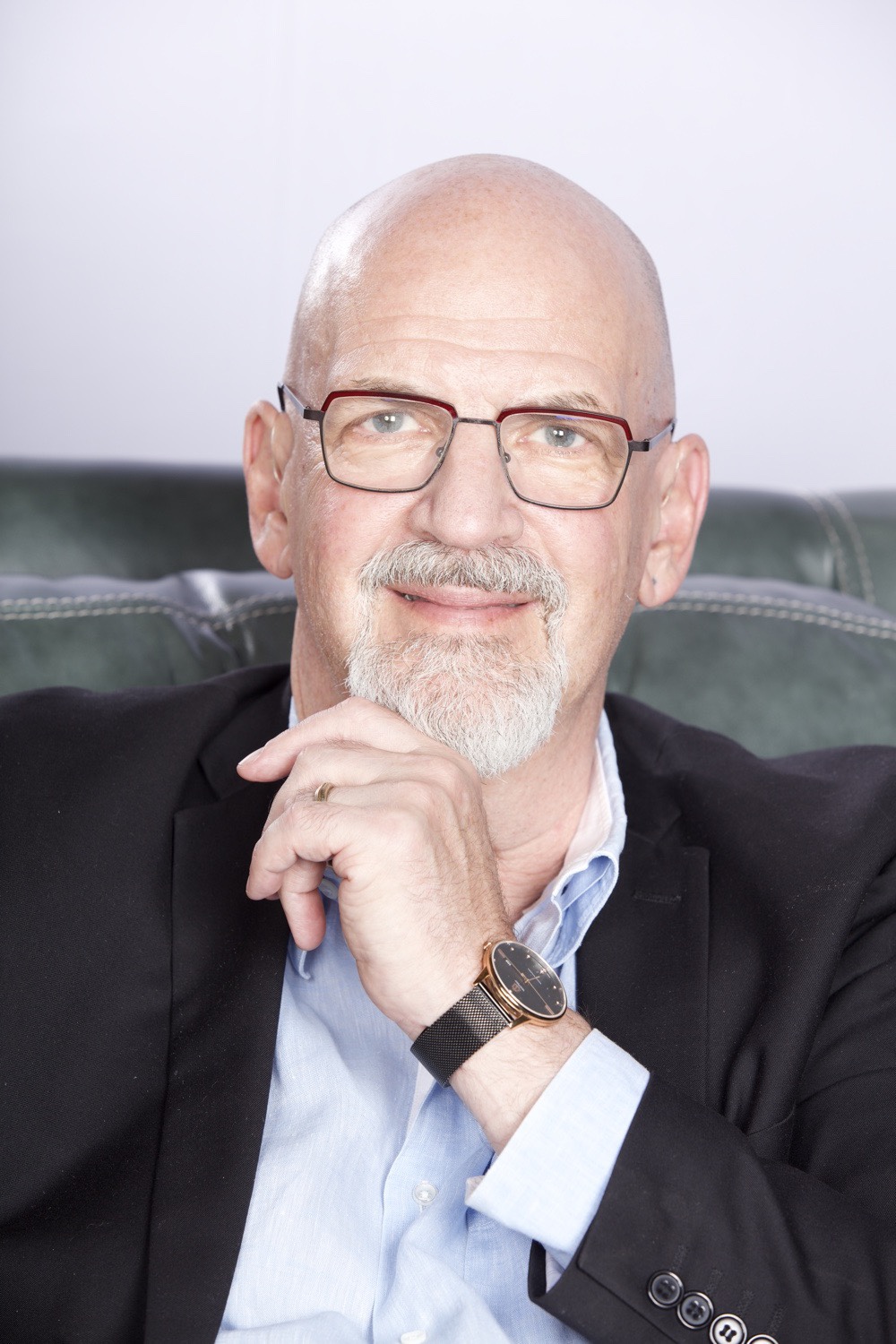
Fred Moss has spent a lifetime learning that one truth, first as a child who softened rooms, then as a psychiatrist who sat with 30,000+ patients, and finally as the UnDoctor, undoing the story that there is something wrong with us.
Not a resume. A life. Here is how the UnDoctor came to be.
Fred arrived into a house already loud with conflict, the youngest of three, and was quietly handed a job: bring balance. He became the peacemaker, the one who could soften a room with a smile. It was his first taste of what he now calls the medicine of connection.
At thirteen he fell into a first, unstoppable love. Weeks after that summer, Steffi was killed by a drunk driver. In an instant he went from the high of first love to permanent loss.
Love is the most powerful force we have, and also the most fragile.
After twice leaving college, Fred took a job as a child care worker at a state hospital for adolescent boys, planning to quit after three weeks. Instead, when he really listened, the boys changed. Their eyes lit up. That job set his life’s course.
Medical school in Chicago, starting in 1984. Officially a doctor in 1988.
Psychiatry residency and a fellowship in Child and Adolescent Psychiatry, complete.
With thousands of patients diagnosed and medicated, no one was truly getting better. Then he carefully tapered a patient off medication, and they came alive. He tried it again, and again, with hundreds. He named what he saw: diagnostic adoption, the moment a person starts living inside a label instead of their life.
On a geriatric dementia unit in Cleveland, Fred began taking people off their medications. Every change was made with care. Some people needed a slow taper, some needed none, and every decision took the patient, the family and the nursing staff into account. It meant swimming against the current. Nobody tells you to slow down when you add a medicine or raise a dose. When you start taking medicines away, you have to listen to every single concern, and he did.
What happened next still feels like a miracle to him, because no one expected it. Some of these elderly patients reawakened. They remembered their families. The screaming and crying at night stopped. They stopped scratching at the staff. They became more capable, and some were winning at beach ball volleyball and Trivial Pursuit. Not long before, these were people considered unable to do much of anything.
Mary, who had not said her daughter’s name in years, looked up and said, “Hi, honey.” Healing rippled outward to families, staff, and the whole community.
When the only psychiatry left required diagnose and medicate, Fred created Welcome to Humanity. From it came his books, The Creative Eight and Find Your True Voice, and 450+ podcast conversations spreading one message: human connection heals. He also writes for Psychology Today: essays on diagnosis, connection and being human.
An aortic aneurysm tore open during a workout. Open-heart surgery the same afternoon left a dacron patch inside his chest. He calls it his covenant, a daily reminder that time must be spent in truth.
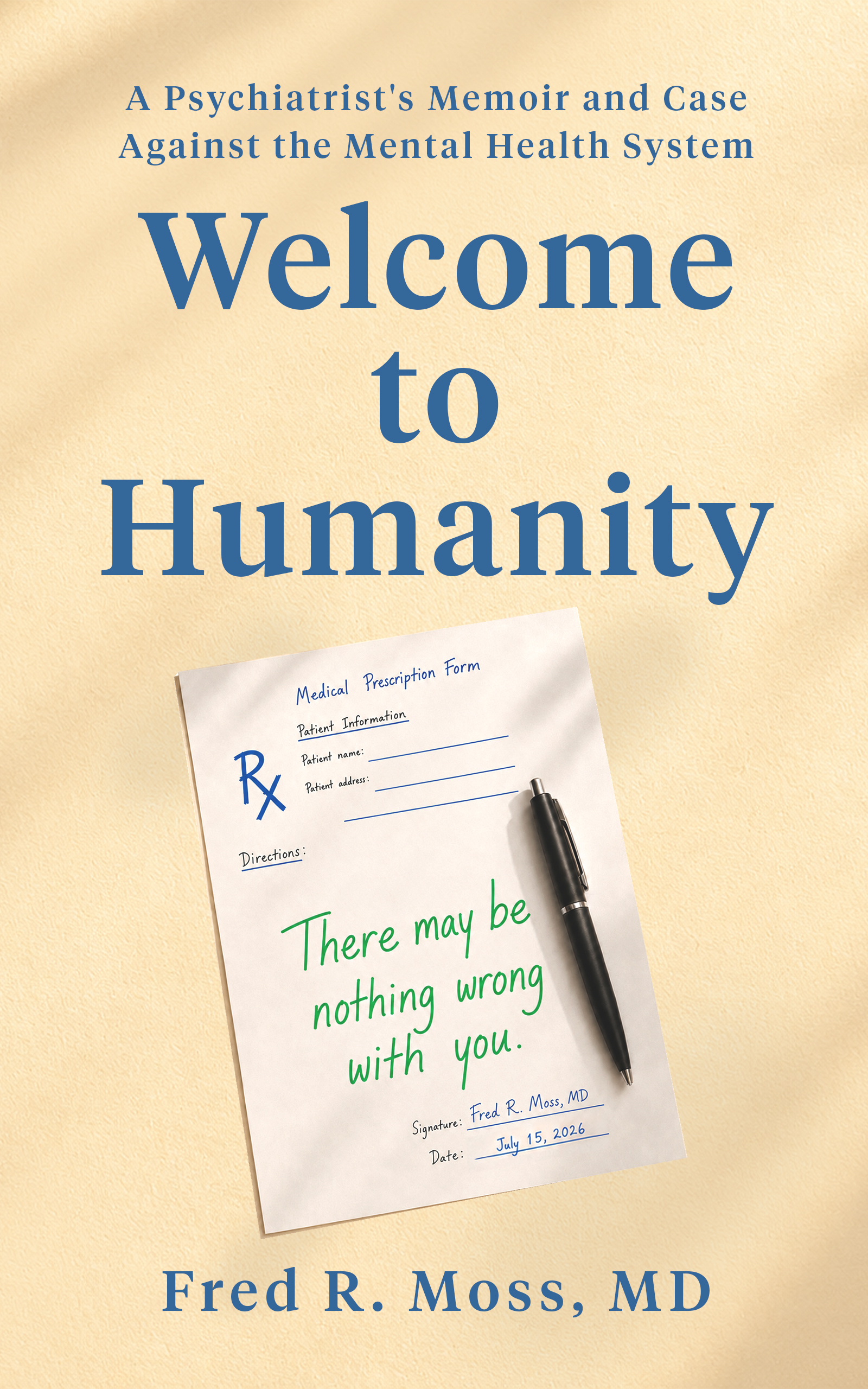
Everything he has learned and lived is now in one place: Welcome to Humanity, a psychiatrist’s memoir and case against the mental health system. It is his invitation to you to begin.
The compass beneath everything.
There may be nothing wrong with you.
You are the healer you have been looking for.
Healing comes from human connection.
The system is not designed to heal you.
You do not need a license to heal.
The process. Release, Examine, Surrender, Embody, Transform. A repeatable path out of the roles that confine us.
The daily practice. Twenty human habits, from gratitude spoken aloud each morning to nature, creativity, rest, and service.
The compass. Five plain truths that point to one place: healing is human, and it belongs to all of us.
“Communication, connection, being with others, creativity, self-expression, and listening are at the core of all healing, not just in mental health but in all healing, including some of the healing that we could certainly use right now these days.”
“There is a decision the person has to make. The person has to agree tacitly that there is something wrong with them, such that an additional supplemental biological chemical intervention is required. So it is in the agreement, not in the substance.”
“The essence is, as things are, you and I are whole and complete right now.”
“All you have is what you have, and you, my friend, as you are, are whole and perfect, just like you are. And life is whole and perfect.”
“Mental health is subject to the conversations we use to describe it. Only. Only, only subject to that.”
Fred is married to visual artist Alexandra Isaievych. Father of two. Their names stay theirs. He is cat dad to Winston, Valentino, and Despacito, and a lifelong swimmer.
He spent eight years in METAL International. His growth and leadership work also includes the Connected Leaders Academy; 15 years in Landmark Education; the Mankind Project (MKP), where he has served as a doctor; and Tony Robbins, where he was a Platinum member for a time. He is a devoted supporter of artists and musicians, including jazz saxophonist and multi-instrumentalist Gary Regina.

Fred has a deep commitment to helping artists and musicians get grounded in their business, so their gifts reach the people already waiting to fall in love with them. Human-centered, creativity-first, never cookie-cutter.

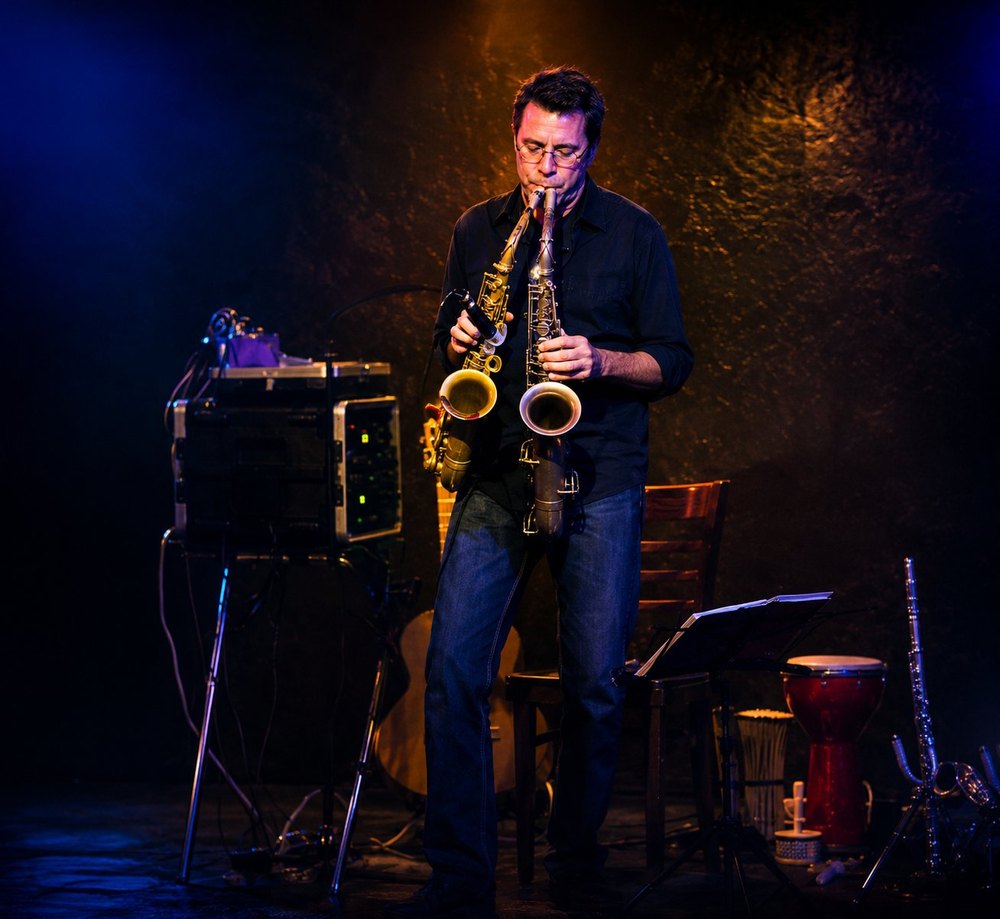
One man who sounds like a full ensemble. Gary layers saxophones, sometimes two at once, with guitar, percussion, beatboxing, flutes, EWI, and vocals in real time. He has kept company with Miles Davis, Earth, Wind & Fire, and the Yellowjackets. Fred built his platform and supports his growth.
Experience Gary’s music →
A bridge between the tangible and the invisible. Alexandra’s paintings reclaim the dignity of the human spirit through color and light. She is also Fred’s wife and creative partner.
Enter Alexandra’s world →Welcome to Humanity is the distillation of 46 years of listening, one honest book. Read it, bring Fred to your stage, or simply say hello.
David is my AI guide, trained on my work. Talk to him anytime.
What raised me, besides my parents
Somewhere along the way, a band, a singer, a comedian and three athletes showed me that there is so much absurdity, and yet so much grace and beauty, inside of what it means to be human.
There’s everyone else: the Beatles, the Stones, Floyd, the Who. And then there’s Led Zeppelin. Blues, folk, thunder and mystery, every way you can sing it, and the song remains the same.
Ann Arbor, 1975. A friend and I, two audiophiles, went out on a weeknight to see someone we’d never heard of. At Hill Auditorium, Bruce and the E Street Band played Born to Run, the first time I’d ever heard it. It was the finest concert of my life. I went home and told everyone I knew what was coming. Who knew it would get this big?
Late teens, a garage turned into my bedroom, up far too late watching Johnny Carson. Some nights a guest host took over, the best improviser I’d ever seen, and he made me laugh out loud until I peed my pants. Letterman saw the absurdity of being human, and the grace in it too. I watched him grow from Johnny’s stand-in into the best there ever was, finding what’s hilarious in anyone, on the fly.
July 1984. I arrived in Chicago to start medical school, and so did a rookie the Bulls had just taken with the third pick. I knew I’d need something besides medicine, so I bought season tickets to a struggling team, knowing only that this kid had hit the shot that won the 1982 NCAA title. Night after night, I called my brother to tell him this was the best basketball player I’d ever seen. He told me I was overusing my superlatives. We both know how that turned out. As a Detroiter, I had mixed loyalties every time Michael had to get through the Pistons. But Michael and I go back a long way.
April 1997. I spent four days in the hospital with meningitis, wondering if I was going to live. That same weekend I was falling in love with golf, and meeting Tiger Woods all over again, a 21-year-old who won the Masters by 12. I was discharged that Sunday afternoon, right after he won. I’ve watched him ever since: the most competitive hero I’ve ever seen, from the deepest bottom to the highest top, still walking through the clumsiness of being human. Like him or not, an extraordinary human being.
Around 2002, we were living in Cincinnati and kept hearing about a high school kid up in Akron, at St. Vincent-St. Mary. We made it our business to be there for his first Cavs games, and to be in the building on his birthday for the next several years. It was a hard stretch in my marriage, and basketball was one of the last threads holding us together. We had early access to one of the greatest ever, and to his unbelievable capacity to get his sh*t done.